
We are transitioning to the Materials Matter Standard and system
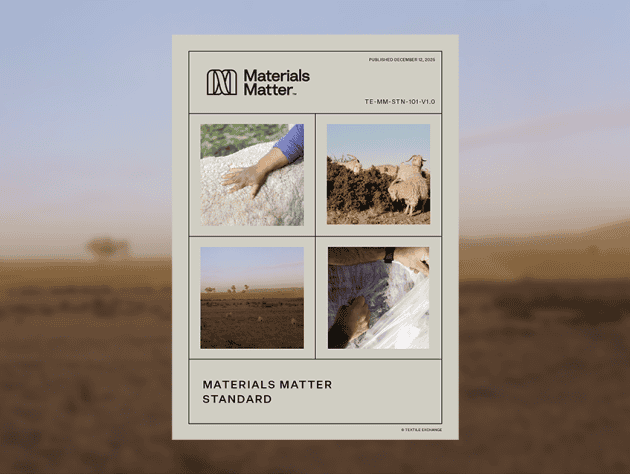
The Materials Matter Standard unifies and harmonizes Textile Exchange’s current standards, while directly supporting our strategy by setting the benchmark for best practice and enabling the industry to move towards a common goal—a world where materials have lasting value, leading to thriving communities and landscapes.

DEVELOPMENT
Building on two decades of industry expertise
For over two decades, Textile Exchange’s system of material-specific standards has guided the fashion, textile, and apparel industry toward more sustainable production. Materials Matter unifies and simplifies this approach, building on the strengths of what came before while offering a more streamlined pathway forward.
Textile Exchange began developing the new framework in 2021 with a clear goal: to align the ambition, rigor, and expected results across its material-specific standards and transition the industry into a more coherent, science-aligned way to measure and verify impact.
By focusing on the earliest stages of the supply system, the standard helps clarify both the risks and opportunities related to raw material production. Combining practice-based and outcome-based criteria, it recognizes the work of participating organizations that meet its requirements and ensures fairness and consistency between them. Certification also provides brands and retailers with an accessible and transparent framework for substantiating claims about their materials.

SYSTEM
A harmonized standards system for climate, nature, people, and animals
The Materials Matter Standard sits at the heart of the Materials Matter system, which integrates the standard, policies, third-party assurance, claims, and traceability tools to ensure certified products reach the market with credibility.

WHY
Supporting the transition to preferred materials production

Criteria
Explore the criteria
The Materials Matter Standard criteria have been developed over five years in close collaboration with a designated International Working Group made up of brands, retailers, suppliers, producers, NGOs, and technical specialists. Two publicly consulted drafts and a pilot version, tested in key material production regions from Peru to Italy, have helped refine the framework, alongside extensive work to ensure alignment with the ISEAL Code of Good Practice for Sustainability Systems.
The criteria unify Textile Exchange’s current standards under one coherent vision: a world where materials have lasting value, leading to thriving communities and flourishing landscapes. The Materials Matter Standard becomes effective on December 31, 2026, and will be mandatory from December 31, 2027.
A Transition Policy was published on April 1, 2026, which outlines the requirements for certified organizations to successfully transition to the new standard. To learn more please review the transition policy.
Explore the difference between the new standard and our current standards here.
TIMELINE
Make sure you are up to date with the transition timeline
What’s in scope for the Materials Matter Standard?
The first version of the Materials Matter Standard includes all materials currently covered by Textile Exchange’s Responsible Animal Fiber framework, including wool, alpaca, and mohair, as well as recycled materials, as currently covered in the Global Recycled Standard (GRS) and Recycled Claims Standard (RCS).
Organic cotton, which has long been an integral part of Textile Exchange’s standards system, will continue to play a central role through a gradual transition pathway for the Organic Content Standard into the Materials Matter system. This pathway will preserve essential functions such as traceability while strengthening the system to enable more holistic, farmer-centered outcomes.
By focusing on the earliest stages of the supply system, the standard helps clarify both the risks and the opportunities related to raw material production. Combining practice-based and outcome-based criteria, it recognizes the work of participating organizations that meet its requirements and ensures fairness and consistency between them. Certification also provides brands and retailers with an accessible and transparent framework for substantiating claims about their materials.
The Content Claim Standard (CCS) will continue to support chain of custody and product claims.

Built to deliver tangible benefits to producers and recyclers
Value for producers and primary processors
– Recognition of best practices to strengthen market access
– Alignment with growing buyer expectations and regulatory requirements
– Improved practices that support productivity, animal health, and worker well-being
– A shared global language for delivering sustainability outcomes
Driving credibility for brands and retailers
For brands and retailers, the system provides a consistent, credible, and data-driven foundation to support sustainability goals and responsible sourcing commitments, through:
– Consistent criteria across materials to simplify sourcing and certification
– Increased credibility and trust in product claims
– Reliable data to meet buyer, consumer, and regulatory expectations
– Streamlined engagement with certification bodies and suppliers
– Alignment with global sustainability goals and raw materials commitments