
Our standards
Global Recycled Standard (GRS)
The GRS also ensures that recycled products are processed in a more climate-friendly way.
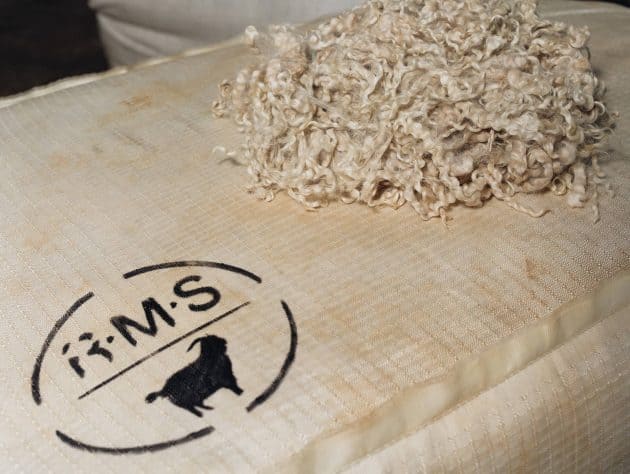
Responsible Mohair Standard (RMS)
The RMS addresses animal and environmental responsibility for mohair.
Supporting credible sustainability claims
For more than 20 years, Textile Exchange’s system of material-specific standards has guided the fashion, textile, and apparel industry toward more sustainable production. Each standard had its own focus and structure, helping to build trust and accountability, and meet the needs of stakeholders. Our role is to develop, revise, and own these standards. Auditing and certification to our standards are handled by third-party certification bodies.
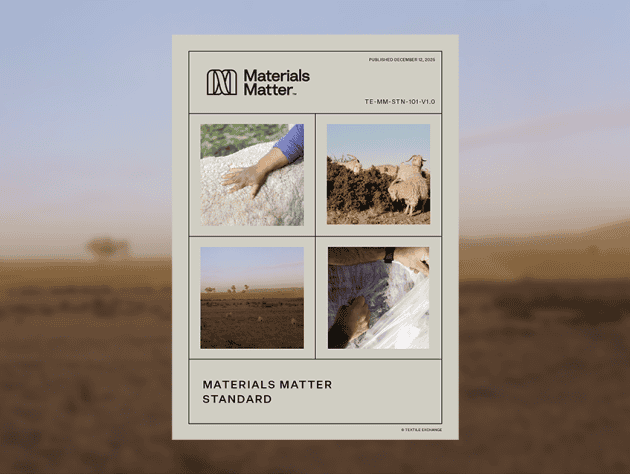
We’re transitioning to the Materials Matter Standard
At Textile Exchange, we are currently unifying and harmonizing our current suite of standards into the Materials Matter Standard, a voluntary sustainability standard for the production and primary processing of raw materials used in the fashion, textile, and apparel industry. It represents a significant evolution of our standards system, building on the strengths of what came before while offering a more streamlined pathway forward.
The new standard sets detailed requirements for the production and primary processing of raw materials—from how land, water, and energy are used, to how working conditions, animal welfare, emissions, chemicals, and waste are managed. Its purpose is to provide a common language and shared direction for the industry, while recognizing the unique contexts of different material producers, processors, and the communities and landscapes they depend on.
The criteria for the Materials Matter Standard were released on December 12, 2025, with the standard becoming effective on December 31, 2026 and mandatory from December 31, 2027.
Organizations may continue using Textile Exchange’s current standards until this date to ensure a smooth shift for certified sites globally.
To learn more about your transition, please refer to the Transition Policy.
Discover more about Materials Matter
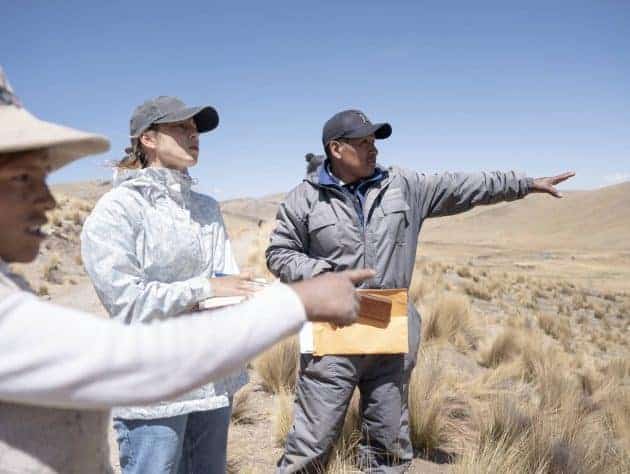
Who is involved in certification to Textile Exchange's standards
Textile Exchange
As the standard owner, we write, develop, and revise standards to formalize and verify best practices at the raw material production level. Our chain of custody standard and traceability system document a product’s path through all stages of production, ensuring companies can make verified product claims. The integrity and effectiveness of our standards are supported through a robust system of assurance, standards and data governance. Through our monitoring and evaluation framework, we track our impacts, learn, and improve over time.
Certification bodies (CBs)
We have over 30 CBs in our system. They are third parties who certify the 90,000 sites in our system. They are responsible for auditing certified organizations, interpreting standard requirements, and deciding whether an organization is conforming to criteria. They issue scope and transaction certificates to verify a company or product and approve claims and labeling for certified organizations.
Accreditation bodies (ABs)
ABs accredit and oversee the CBs in our system and ensure they are operating with integrity.
We’re ISEAL Code Compliant
Textile Exchange is committed to continuously improving our standards system and ensuring its alignment with the ISEAL Code of Good Practice for Sustainability Systems.The Code provides guidance on how we develop our policies and procedures for organizational functions such as standard-setting, assurance, monitoring, evaluation, learning, data management, and claims.
Dive deeper into our standard-setting procedures
Frequently Asked Questions
If you have a question not answered here, get in touch with us directly, and we’ll be happy to answer it for you.
How does Textile Exchange decide to develop or take on a standard?
We’re committed to building credible, internationally recognized standards that include assurance, monitoring, and evaluation systems. A new standard comes into play whenever a gap is identified in the industry. We’re ISEAL Code Compliant and use the ISEAL Codes of Good Practice in the development and implementation of our standards.
Are Textile Exchange standards recognized globally?
Yes, all our standards apply globally. You can use our logos worldwide as long as you meet the requirements for logo use and claims.
Who is authorized to audit Textile Exchange standards?
The list of approved certification bodies (or CBs) can be found at the link below.
Do I need to be a member of Textile Exchange to use Textile Exchange standards?
Standards and membership are two distinct services. Membership isn’t needed to get certified to one of our standards, although membership offers great benefits to our partners. You can find more information about membership here.
Do you have translations of your standards available in other languages?
Visit the Document Library to see all standards documents. For some, translations are available.
I would like to write an article about a Textile Exchange Standard. Can I conduct an interview with one of your team to get more details?
We’re happy if you want to write about one of our standards. You can contact our communications team.