
Preferred Production Systems: Principles, Definitions, and Guidance
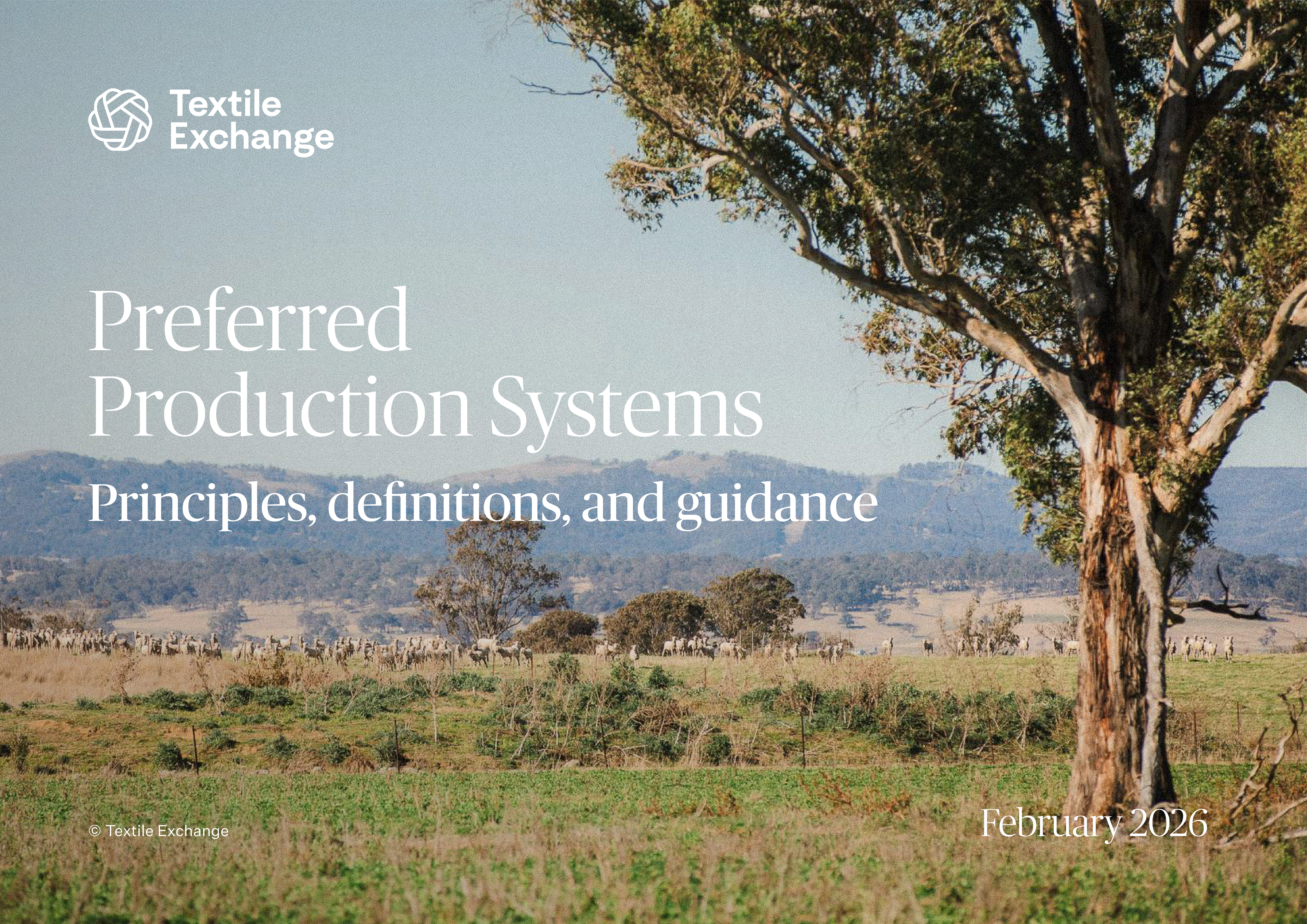
Textile Exchange has recently recognized the need to evolve its thinking—and that of the industry—from the concept of “preferred materials” to that of “preferred production systems”.
The change in language supports our theory of change and outcomes-driven approach by contextualizing the transformation we are aiming to drive within production systems. It also articulates an ideal future state for production systems, without prescribing a universal list of “preferred” and “non-preferred” materials.
The below document provides high-level definitions, guidance, and principles for the fashion, apparel, and textile industry to support the transition to preferred production systems for fibers and materials.
DOWNLOAD
Download the document
Preferred Production Systems: Principles, Definitions, and Guidance covers Tier 4 material production systems, encompassing the production and processing stages of raw material development within the fashion, apparel, and textile industry. It is intended for a broad range of audiences, including brands, suppliers, consultants, and academia.
DEFINITION
What are “preferred production systems”?
Textile Exchange defines preferred production systems as:
“Production systems that deliver reduced impacts and increased benefits for climate, nature, people, and animals against the conventional equivalent, through a holistic approach to management and transformation.”

WHAT’S INSIDE
The guidance paper includes sections on:
- Why preferred production systems?
- Overarching principles of preferred production systems.
- Principles specific to cropping, animal, forestry, and recycling systems.
- Background to the concept of preferred.
- Definitions and terms related to preferred materials.
The contents of this document will underpin Textile Exchange’s tools, resources, and initiatives, including:
- Pathways to preferred production systems for Textile exchange members, including related actions and targets.
- Annual reporting mechanisms, such as the Materials Market Report.
- The Fiber and Materials Matrix.
- The Materials Matter Standard system.
- Material summaries (available to members in The Hub)
NOTE: The document is intended to replace the 2023 Preferred Materials: Definitions and Guidance.
