Solving the Ecosystem Regeneration Puzzle in South Africa

Words by Bronwyn Botha, with photography by Carl Van der Linde
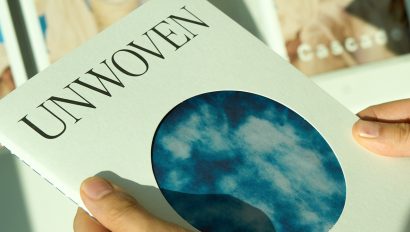
This story was featured in Unwoven Issue 03, Textile Exchange’s annual magazine. Read the full issue here.
For South African wool farmer James Brodie, a locally adapted understanding of livestock and land management is helping regenerate his farm in the Karoo region. In doing so, he is building a resilient farming system that honors the landscape’s unique ecology.
At the gates of Doornplaats farm, the sounds of waking birds grow louder as the sun begins to rise. Down the undulating dirt road to the homestead, farmer James Brodie greets us with a warm South African welcome.
Here in the Karoo region of the Eastern Cape, just outside of the historic town of Graaff-Reinet, James farms with sheep, cattle, and a small herd of alpacas, which belong to his wife, Sandy. A fourth-generation farmer, he began his journey in regenerative agriculture long before the movement gained the traction that it has today. After taking on the farming enterprise from his father in 2003, he has been on a mission to build on the work that his great-grandfather began in 1896.


Adopted by the Brodie family, regenerative farming aims to bring depleted land back to life and support the long-term functioning of the surrounding ecosystem. The idea is that, as part of maintaining a healthy livestock business, farmers use their animals to help implement principles designed to improve the health of ecosystems and boost biodiversity.
“We’re all farming on degraded land to some extent and, unless we regenerate, we will continue to lose the battle against desertification,” James says, explaining his interest in the approach.
Over time, he has learned to use the animals’ behavior and grazing style to mimic the ecological processes that once shaped the local landscape. For centuries, South Africa’s rangeland ecosystems evolved under vast migrating herds of herbivores that followed the rains and kept just ahead of the predators that lurked behind. Those ecosystems depended on short periods of intense grazing followed by long periods of rest.
Today, there are far fewer animals on the Brodies’ land than the historic mass migrations of animals which would have likely grazed the entire farm in a single pass. But drawing on this ecological understanding, James uses an adaptive grazing management approach that considers the right intensity, type, and timing of grazing in each camp, followed by adequate periods of recovery. He rotates his herds of sheep and cattle all year round, using their movement to promote plant recovery in the growing season and remove dead vegetation in the dormant months.
When more disruption is needed for restoration, James turns to kraaling—a South African practice rooted in local tradition. This involves collecting his ewes and lambs in enclosures strategically positioned on bare ground patches. He leaves them here for a couple of nights before moving to a new area. Their hooves break up crusted soil surfaces while their dung and urine fertilize the area, giving dramatic results. When the rains arrive, once-barren patches burst to life with vegetation.
As he leads us through the farm, James points out patches of bare ground still in need of restoration, then proudly gestures to areas that are now filled with life thanks to his efforts. “I’m buying back more land with every bare patch of ground I regenerate,” he says with a smile.

As the wider veld recovers, it responds in kind. Like any ecosystem, it’s a puzzle made up of thousands of interconnected pieces that, if you are willing to work with them and patiently figure out which fits where, will reward you in ways you can’t imagine.
Hardy pioneer species give way to more palatable climax grasses. Plant diversity improves. With more varied, nutrient-rich forage underfoot, the livestock get healthier, and yields increase. Thanks to James’s careful planning, there’s foliage for them to eat through both winter and summer, reducing reliance on expensive supplementary feeds.
Animals quickly learn the routine—they know that when one gate closes, the next opens onto greener and more nutritious grass.
His herds move calmly, with no prompt or pressure at all, into the next grazing area, minimizing handling stress. Regularly moving them helps to break up pest cycles and avoid problem areas during risky times too, decreasing the need for antibiotics and treatments.
Finding a balance of practices that unite the welfare of his animals with that of the land is key. “Everything we do starts with microbes,” he explains. “From the microbes in the soil to the ones in the guts of our animals—I call it microbes to market.”

“But you need to choose the right type of animal and balance the benefits of the veld with their health and production,” he adds, speaking to the importance of raising locally adapted livestock. “It should never come at their expense.”
The use of practices such as kraaling has also led to a marked decrease in predation. Gathered together and protected by an electric fence, the herd is less vulnerable to attacks. With the help of the alpacas, who guard the sheep flocks, these non-lethal predator control methods are part of a broader effort to build human–wildlife coexistence. By reducing vulnerability, they balance the financial toll of livestock losses while respecting the role predator species play in healthy ecosystems.
Together, these benefits help to build a circular model where money saved on external inputs and earned through higher quality wool and meat is invested back into the land, animals, and people. Improved ecological health leads to better products, better market opportunities, and ultimately a more resilient business—all of which are critical in the face of growing environmental and economic risks.


The Brodies’ approach is backed by two key schemes: the Responsible Wool Standard and the Savory Institute’s Land to Market program. More than just labels, these programs are a key part of their business model. Certification to the Responsible Wool Standard verifies land and animal welfare practices and provides access to a premium market. Meanwhile, the Land to Market program helps to recognize his achievements in regeneration in the market.
At Doornplaats, regeneration doesn’t stop with the soil, but extends into social outcomes through training, upskilling, and providing work opportunities that lead to social mobility too. James’s permanent farm staff have grown into respected leaders in the regenerative space, often leading demonstrations and sharing knowledge with visiting farmers.
During shearing season, a group of local women are paid to sort the wool: wives and daughters of local farmworkers from Graaff-Reinet, Murraysburg, and neighboring farms, who gain added financial independence through this work. “The money we make supports our households and provides for our children, contributing to their school needs,” explains Janet, who leads the group. “It’s hard work, but we enjoy it—it’s much better than sitting idly at home.”


Beyond the farm gate, James has become a national advocate for regenerative farming. He supports a Regenerative Land Management training program run by Healing Hooves and is one of the hosts of the Regenerative Grazing Farm Tour run by The Regenerative Agricultural Association of Southern Africa (RegenAg SA). Through a partnership with SocioTech, he’s also working with more than 100 small-scale farmers across four South African provinces to improve land and livestock management and secure rural livelihoods.
“The biggest gap to bridge is the four inches between your ears,” he jokes, referring to the need for a mind shift from industrial farming towards a regenerative approach. He sees himself as a lifelong learner and believes he has only scraped the surface of these complex ecosystems.
Where to graze, for how long, and how long to rest, is an ever-evolving consideration in his adaptive management plan that he tweaks a little more with each season. He has put monitoring strategies in place to help measure the impact of his management. Every answer he gets opens up new questions to explore.
“What we have achieved on our land through regenerating ecological function and its impact on productivity was unimaginable when we started—and we are far from the end of this journey,” he smiles. Just when he thinks the land can’t get any better, it surprises him again. He never stops learning because nature never stands still—it’s always evolving, just like the farm.
This story was featured in Unwoven Issue 03, Textile Exchange’s annual magazine. Read the full issue here.
Related Posts