
Polyester Life Cycle Assessment (LCA) Study
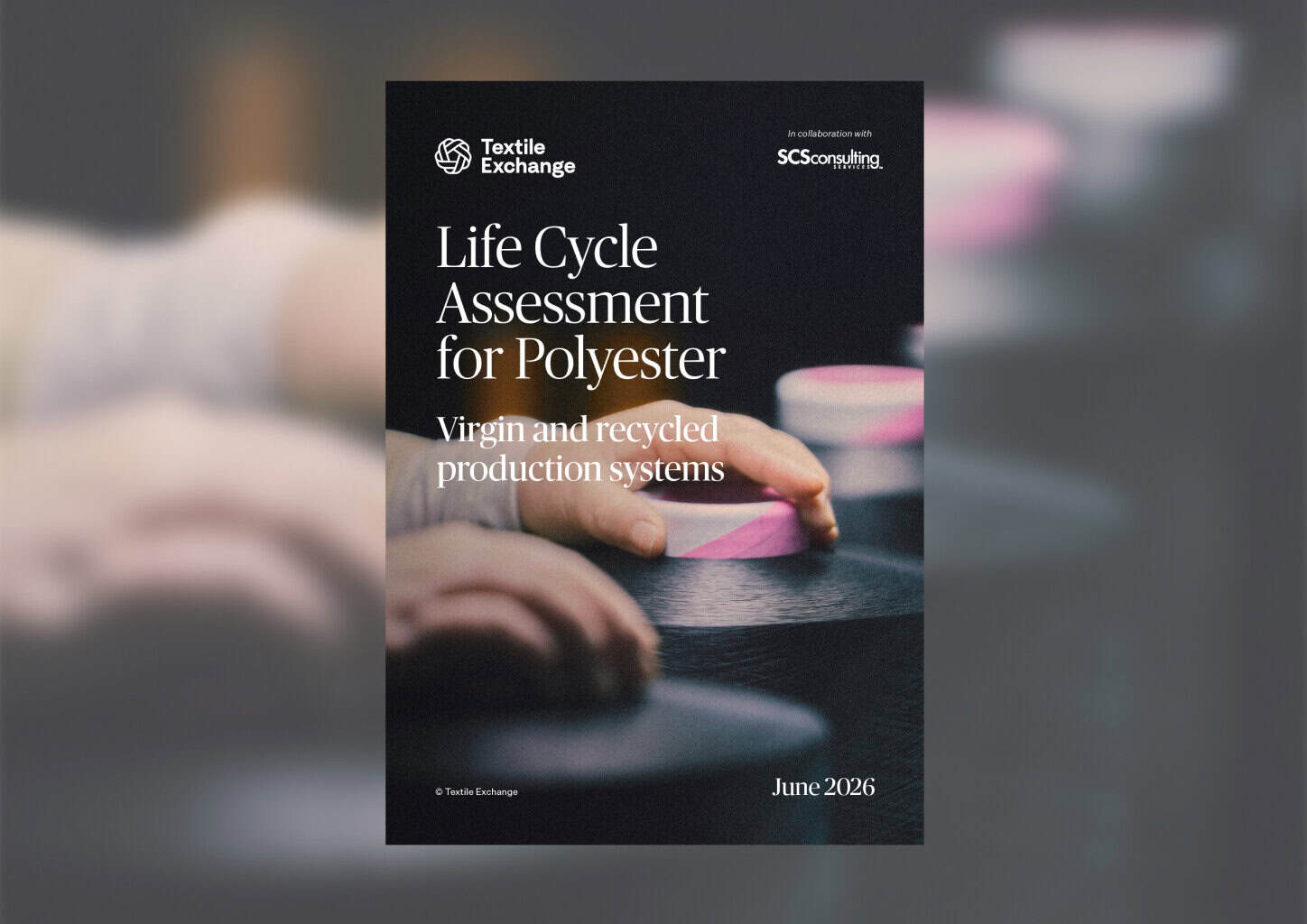
The Life Cycle Assessment for Polyester Study is part of Textile Exchange’s series of LCA studies designed to improve the quality and robustness of environmental impact data for raw material production across the fashion, textile, and apparel industry.
Key takeaways
How polyester is produced strongly influences its environmental impact
Depending on the technology, key hotspots include the production of virgin fossil-based (petrochemical) inputs, waste collection and sorting (for recycled polyester only), energy use, and transport.
- For virgin polyester: The production of the main petrochemicals used to make virgin polyester (particularly monoethylene glycol (MEG), purified terephthalic acid (PTA), and dimethyl terephthalate (DMT)) is the dominant contributor to most impact categories. The energy sources used for electricity and heat and their associated emissions are another major contributor.
- For thermomechanical recycling: Electricity use and feedstock collection, especially when waste materials must travel long distances to processing facilities, are two major hotspots for climate change, acidification, eutrophication, and abiotic depletion of fossil fuels.
- For chemical recycling: The two largest environmental hotspots were found to be energy consumption for electricity and heat, based on the sources and their associated emissions, and the use of input chemicals used in the recycling process, including solvents like methanol.
Polyester production can have serious impacts on workers and surrounding communities
This includes unsafe working conditions, labor rights violations, and gender-based violence. Impacts also include violence by law enforcement against local communities in efforts to secure access to oil and gas extraction sites around the world, as well as severe health impacts linked to accidental spills and pollution.
For recycling, both PET plastic bottles and textile-to-textile supply chains are often informal and poorly regulated, which can lead to human rights impacts. However, the textile-to-textile recycling supply chain in particular creates the potential for meaningful solutions to help tackle the world’s textile waste crisis.
Reducing reliance on all virgin fossil-based inputs is a critical level for impact reduction
—The LCA study identifies virgin fossil-based inputs as the largest contributor to environmental impact in virgin PET production. This underscores that reducing – and ultimately eliminating- reliance on virgin fossil-based inputs is a critical lever for driving impact reduction, as laid out in Textile Exchange’s Principles of Preferred Production Systems.
Complementary measures, such as increasing renewable energy use and sourcing waste locally to minimize transport emissions, play an important role in further reducing impacts—particularly within recycled systems.
Key actions for brands and retailers include investment in recycling collection, sorting, and infrastructure, as well as supply chain traceability
The findings reinforce the key actions brands and retailers should take to support recycling technologies, including investing in post-consumer collection, sorting technologies, and enabling infrastructure.
For human rights, the study highlights the importance of looking beyond labor rights to consider the full spectrum of human rights when assessing impacts on people. Companies should work toward full traceability of their polyester supply chains by engaging with supply chain actors and progressively mapping upstream to the origin.
Download our short summary
This document summarizes the Textile Exchange polyester LCA study, detailing the study’s goal and scope, key findings on virgin and recycled polyester production, and social impact insights. It also presents the study’s conclusions and recommendations.

“This LCA study marks a significant update to existing polyester LCA data and advances our understanding of the impacts of its production for the fashion, textile, and apparel industry. By addressing known data gaps across both virgin and recycled polyester, and by identifying major hotspot impact areas, these findings create a stronger foundation for making informed decisions that support the shift toward preferred production systems.”
Beth Jensen
Chief Impact Officer
Textile Exchange
Integrating the data into global databases
The polyester LCA data will be submitted to industry databases to support modeling and progress tracking of greenhouse gas emissions and other impacts.
The data is primarily intended to serve as proxy data, in cases where source-specific LCA data is not available. It is designed to provide a credible, consistent foundation for understanding the impacts of polyester production and to inform data-driven decision-making.
The data for the polyester LCA will be submitted to the following databases throughout 2026:
- Higg MSI
- Ecoinvent
- Quantis WALDB


Read our guidance on the responsible use of LCA data
As with all LCA data, the findings from Textile Exchange’s LCA studies should be used carefully and in the appropriate context. You can find out more about the responsible use of LCA data in our dedicated report.